
Peter LaNasa, MD
Radiation Oncologist
Known for his patient-first approach and expertise in advanced radiation therapy.
New Welcome to our newly launched website. Same two centers, same physicians, and everything easier to find.

Stereotactic Radiation: SBRT and SRS
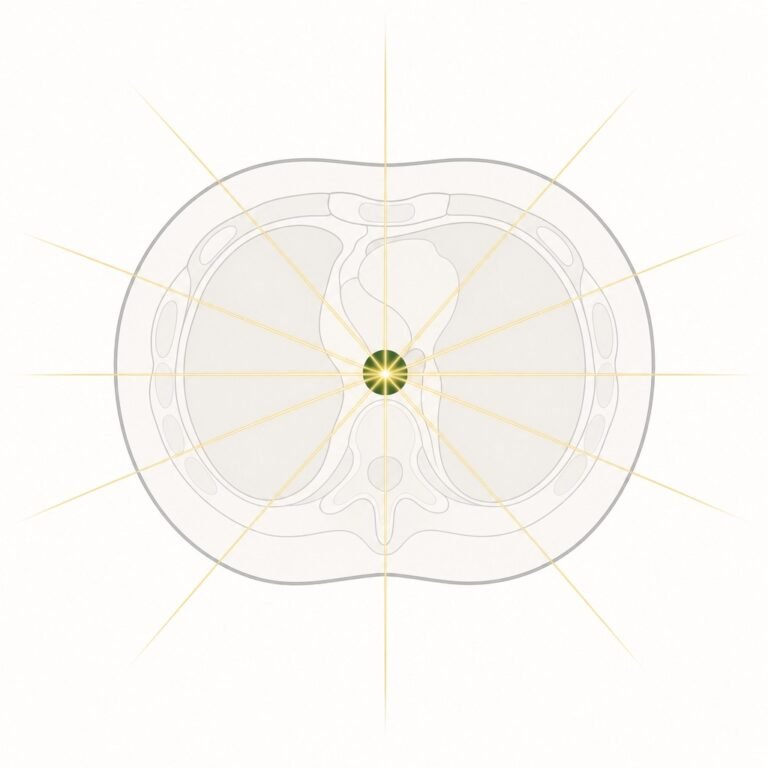
Where a standard course runs for weeks, stereotactic treatment is one to five sessions, for appropriately selected patients. The treatment course is shorter in duration due to precise targeting with image guidance, so a much higher dose can be given while sparing adjacent critical organs.
Most insurance accepted and Medicare is welcome. See how referrals, insurance and cost work.
Why it is different
One to five visits instead of twenty five or more. For people travelling in from outside Tarrant County, that difference is not a small one.
The dose falls away sharply at the edge of the target, which is what makes treating something close to the spinal cord or the brainstem possible.
Radiosurgery is a misleading word. There is no cut, no general anesthetic and no recovery from an operation, because no operation happens.
Some tumors sit where an operation would be difficult or too risky. Being able to aim rather than cut changes what is treatable.
In plain words
Stereotactic treatment uses the same linear accelerator as standard radiation. What changes is how tightly you are held in position, how much imaging is done to confirm it, and how sharply the dose is made to stop at the edge of the target.
For appropriately selected patients, precise targeting with image guidance allows a much higher dose to be given each time while sparing adjacent critical organs. That is why the course is one to five sessions rather than several weeks.
The two names describe where it is used rather than two different treatments. SRS, stereotactic radiosurgery, refers to the brain and the spine, and is usually a single session. SBRT, stereotactic body radiation therapy, refers to everywhere else, such as lung, liver and adrenal, and usually runs to between one and five.
How it works
Not every tumor suits this approach. It needs to be small, clearly defined on a scan and in a place where the dose can be stopped cleanly. Your oncologist will tell you plainly if it is not a fit.
You are fitted with whatever will hold you steady: a molded cushion, or for brain treatment a light mesh mask. It is made to your shape. Then a planning scan is taken in that exact position.
This is the slow part, and deliberately so. The plan is built and independently checked before a single beam is delivered, because there is no room to be approximately right at this dose.
Each session is longer than standard radiation, often thirty to sixty minutes, because your position is imaged and confirmed before and during delivery. You still go home afterwards.
Scans afterwards track how the target responds. Treated tissue can take months to settle and change on a scan, which is expected and is explained to you rather than left to worry about.

Fewer visits means less of your life spent here.
A five-week course and a three-visit course can treat the same thing. When both are appropriate, the shorter one gives you back weeks you would otherwise have spent driving to appointments.
Who it is for
Precision is not the same as suitability. A tumor that is large, poorly defined on a scan, or wrapped around something that cannot tolerate the dose is better treated another way, and being told so is a good outcome of a consultation rather than a disappointing one. Where SBRT is not the answer, a longer course of external beam radiation usually is.
Why it has become standard
Where surgery is not advisable for an early-stage lung tumor, stereotactic radiation has become a widely accepted alternative rather than a second-best option.
Our doctors
Radiation Oncologist
Known for his patient-first approach and expertise in advanced radiation therapy.

Radiation Oncologist
Focused on precision treatment planning and compassionate, whole-person care.
Questions
No. This is the most common misunderstanding we correct, and it worries people unnecessarily. There is no incision, no general anesthetic and no surgical recovery. The name describes how precisely the radiation is aimed, not a cut. You walk in and you walk out.
Standard radiation is spread over weeks partly to protect the healthy tissue the beam has to pass through. With precise targeting and image guidance, the dose is shaped to spare adjacent critical organs, so for appropriately selected patients a much higher dose can be given in far fewer sessions.
It would be, if it were delivered the same way. The safety comes from confinement rather than from the size of the dose. This is also why the planning takes longer and why every plan is independently checked before treatment: at this dose, being approximately right is not acceptable.
To hold you in exactly the same position, because millimeter accuracy is meaningless if you shift. A brain treatment uses a light mesh mask molded to your face, which people find is easier in practice than it sounds when it is described. Body treatments use a molded cushion instead. If you find it difficult, say so at the fitting rather than on the day.
Often fewer than a long course, and tiredness is the most common. Beyond that they follow the target: chest treatment can cause a cough or breathlessness, and treatment near the spine can cause a temporary flare of pain in the days afterwards. Because the dose per session is high, effects can appear weeks or months after treatment has finished rather than during it, and a small number are lasting. Your oncologist will go through the ones that apply to your site, and how likely each is, before you consent to it.
Sometimes, and that decision is not made by a radiation oncologist alone. It depends on the tumor, the stage and your general health, and it is worked out with your surgeon rather than in place of them. Ask for the comparison explicitly at your consultation: it is a fair question and you should get a straight answer. If you already have a plan from somewhere else, you are welcome to bring it and ask for a second opinion.
Patient stories
Dr. Lanasa put me at ease immediately and was zeroed on me at each weekly visit during my eight weeks of therapy. His bedside manner is that of a caring and concerned doctor. Staff, like Dr. Lanasa is second to none.
Above Excellent. This man spent literally 2 hours, explaining to me my treatment plan. He is an extremely optimistic inspiring and informative physician. Extremely compassionate. We need more Doctors like him. Thank you so much.
I am so happy I picked Dr. Barker as my husband's doctor. When we learned my husband oral cancer we were shocked and lost about how to start treatment. Dr. Barker was the first doctor we saw and he led us to my husband's surgeon and oncologist. Dr. Barker explained everything to us and answered all our questions. He is the most wonderful doctor. When a family has to go through cancer it make so much easier when you have a doctor like Dr. Barker. He really cares about his patients and their family.
Prostate Treatment by Radiation Therapy completed at the USMD Prostate Cancer Center in Arlington. Dr. Lanasa is exceptional and his staff is very professional. Technicians are friendly and call patients by name and also get you in and out quickly as they know their business.
The best Professional staff and technition help I have ever been involved with in my 66 years. They save my life.
I picked this guy off the internet for no other reason than he had attended college in my home town and of course was a radiation oncologist which is what I needed. The thing I liked best was his honest and direct answers to all my many questions.He was optimistic and the outcome of the radiation was just as he said it would be. What a lucky choice for me.
01 / 06
Online requests are secure and confidential.
This page is for information and is not medical advice. Stereotactic treatment is only suitable for certain tumors. Please talk to a qualified physician about your own condition.