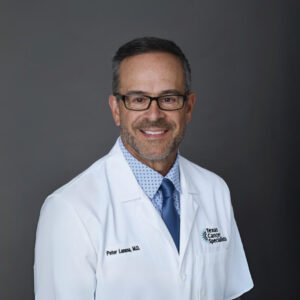
Peter LaNasa, MD
Radiation Oncologist
Known for his patient-first approach and expertise in advanced radiation therapy.
New Welcome to our newly launched website. Same two centers, same physicians, and everything easier to find.

External Beam Radiation Therapy
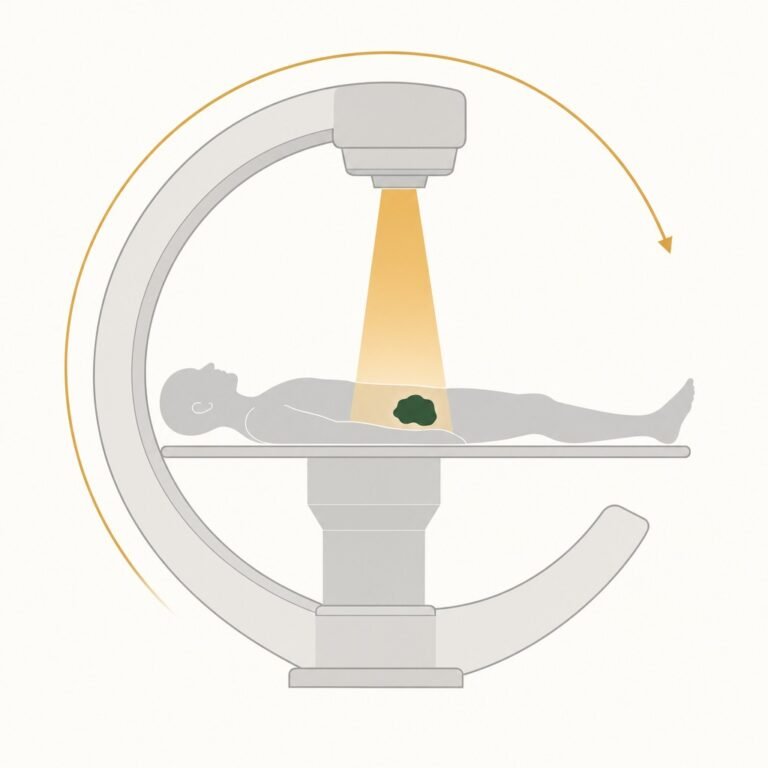
Treatment comes from a machine that moves around you. The machine never touches you, nothing is cut, and you are awake the whole time. Patients are treated to a dose appropriate for their stage of disease.
Most insurance accepted and Medicare is welcome. See how referrals, insurance and cost work.
Why it is used so often
No incision, no anesthetic, no hospital stay. You lie on a table and the machine does the work around you.
IMRT and RapidArc vary the strength of the beam across the target, so the tumor gets the dose and the tissue beside it gets far less.
Images are taken at the start of each visit to confirm you are in exactly the right position before anything is switched on.
Appointments are short and scheduled at the same time each day. For many treatments people keep working and driving throughout, and for some, particularly head and neck or radiation given alongside chemotherapy, the later weeks are harder.
In plain words
A machine called a linear accelerator sends a beam of high-energy radiation through the skin to the tumor underneath, damaging the cancer cells so they cannot keep dividing. Both of our centers treat on a Varian TrueBeam, which re-checks its own aim every ten milliseconds while it works. You will not see the beam, hear anything alarming, or feel it happening.
IMRT and RapidArc are ways of shaping that beam. Rather than a plain rectangle of radiation, the beam is split into many small parts, each set to its own strength, and matched to the outline of your tumor as the machine rotates around you.
The dose is usually divided into small daily treatments over several weeks. That sounds like a lot of visits, and it is, but splitting it is what lets healthy tissue repair between sessions more completely than the cancer does. It is also why missing days matters, and why your appointments are held at the same time each day.
How it works
Your radiation oncologist goes through your diagnosis, your scans and your other treatment, and explains what radiation would add in your case and what it would cost you in side effects. What to bring, whether you need a referral, and how insurance is handled is set out in full on our new patients page.
A planning scan, taken in the exact position you will be treated in. Small marks on the skin, and sometimes a mold or a headrest, make sure you lie the same way every day. Those marks may be permanent, and we will tell you which before the scan rather than after it.
Your dose is mapped onto that scan and checked before anything is delivered. This usually takes a few days, which is normal and not a delay in your care.
Weekdays, at roughly the same time each day. You are in the room about fifteen minutes and the beam itself is on for only a few of those. You are alone in the room while it runs, but never unwatched: your therapists see you on camera the whole time and can talk to you, and you can talk back to them.
You are seen weekly during treatment and again afterwards, so side effects are managed as they appear rather than after they have built up.

Treatment fits around your day, not the other way round.
A course of radiation is a lot of appointments, but they are short ones. Most people keep their routine, and that matters more than it sounds.
Who it is for
Radiation is almost never a decision made alone. Your radiation oncologist works with your surgeon, your medical oncologist and, for prostate cancer, your urologist, so that the order and timing of your treatment is agreed rather than improvised. External beam is also not the only option: some tumors are better suited to a high dose given in very few sessions, and some to radiation given as a medicine. Which one fits you is part of that same conversation.
Our doctors
Radiation Oncologist
Known for his patient-first approach and expertise in advanced radiation therapy.
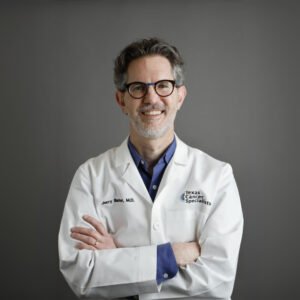
Radiation Oncologist
Focused on precision treatment planning and compassionate, whole-person care.
Questions
No, and yes. External beam radiation passes through you and stops when the machine switches off. Nothing stays behind after external beam treatment. You are safe to hug your grandchildren, share a bed and sit next to anyone, from the first day to the last. Some other kinds of radiation treatment, such as radiation given as a medicine, can involve short-term precautions. We will tell you plainly which apply to you.
Most are local to the area treated and build up over the weeks: skin that looks and feels sunburned, and tiredness that is real and worth taking seriously. Beyond that they follow the target. Treatment to the chest or the neck can make swallowing sore. Treatment to the pelvis can bring urinary frequency and urgency, bowel irritation, and changes in erectile function. Some effects appear months or years after treatment has finished rather than during it, and a small number are permanent. Your oncologist will go through the ones that apply to your treatment, and how likely each is, before you consent to it, and you are seen weekly during the course so they are managed early rather than after they have built up.
The treatment itself is painless. You feel nothing while the beam is on. The hard part for most people is lying still in one position for a few minutes, and side effects that build up gradually over the course rather than anything that happens in the room.
It depends entirely on what is being treated and why. A course aimed at cure is often several weeks of weekday visits. Treatment given to relieve pain may be a handful of sessions or even one. You will be given your exact number at your planning appointment, not left guessing.
Almost always, yes. There is no anesthetic and no sedation. Many people drive themselves every day of the course. Later in a long course some people get tired enough to prefer a lift, and that is worth planning for rather than being surprised by.
Only in the area being treated, and not always. Radiation affects hair in the path of the beam, so treatment to the head can cause hair loss on the head, while treatment to the chest or a limb will not touch the hair on your head at all. Hair usually grows back once treatment finishes, though after higher doses it can come back thinner, or not at all. This is one of the clearest differences between radiation and chemotherapy.
They are both ways of shaping the dose. With RapidArc the machine delivers the treatment while rotating continuously around you, which usually means less time on the table for the same plan. Which one is used is a technical decision your team makes based on your anatomy and your target.
Patient stories
Dr. Lanasa put me at ease immediately and was zeroed on me at each weekly visit during my eight weeks of therapy. His bedside manner is that of a caring and concerned doctor. Staff, like Dr. Lanasa is second to none.
Above Excellent. This man spent literally 2 hours, explaining to me my treatment plan. He is an extremely optimistic inspiring and informative physician. Extremely compassionate. We need more Doctors like him. Thank you so much.
I am so happy I picked Dr. Barker as my husband's doctor. When we learned my husband oral cancer we were shocked and lost about how to start treatment. Dr. Barker was the first doctor we saw and he led us to my husband's surgeon and oncologist. Dr. Barker explained everything to us and answered all our questions. He is the most wonderful doctor. When a family has to go through cancer it make so much easier when you have a doctor like Dr. Barker. He really cares about his patients and their family.
Prostate Treatment by Radiation Therapy completed at the USMD Prostate Cancer Center in Arlington. Dr. Lanasa is exceptional and his staff is very professional. Technicians are friendly and call patients by name and also get you in and out quickly as they know their business.
The best Professional staff and technition help I have ever been involved with in my 66 years. They save my life.
I picked this guy off the internet for no other reason than he had attended college in my home town and of course was a radiation oncologist which is what I needed. The thing I liked best was his honest and direct answers to all my many questions.He was optimistic and the outcome of the radiation was just as he said it would be. What a lucky choice for me.
01 / 06
Online requests are secure and confidential.
This page is for information and is not medical advice. Treatment recommendations depend on your diagnosis, your stage and your general health. Please talk to a qualified physician about your own condition.