
Peter LaNasa, MD
Radiation Oncologist
Known for his patient-first approach and expertise in advanced radiation therapy.
New Welcome to our newly launched website. Same two centers, same physicians, and everything easier to find.

Image-Guided Radiation Therapy
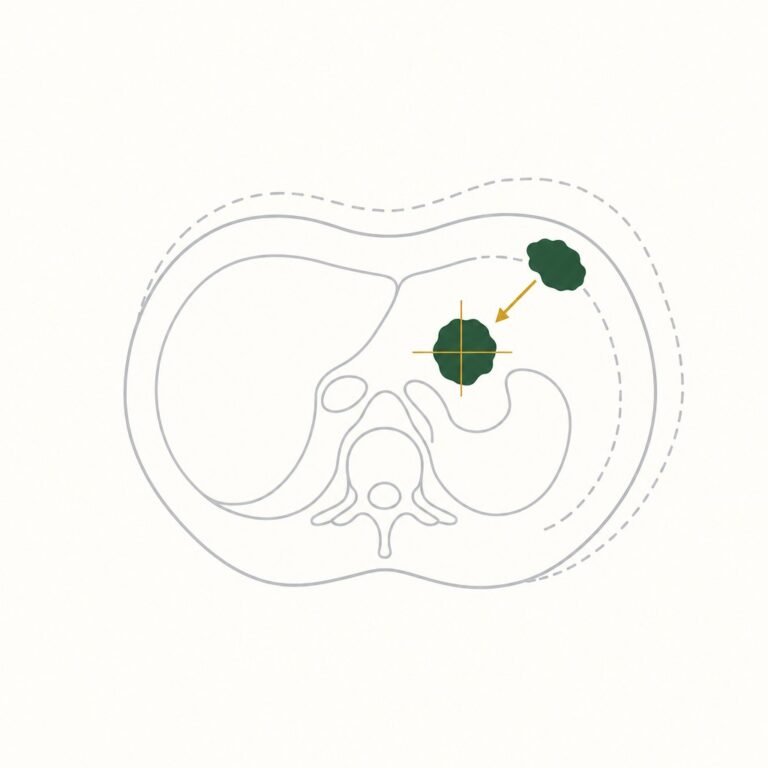
Pictures are taken while you are lying in the treatment position, immediately before the beam is switched on, and your position is corrected if anything has shifted. It happens at every session, and it is the reason a plan drawn weeks ago still fits you today.
Most insurance accepted and Medicare is welcome. See how referrals, insurance and cost work.
Why it matters
Weight changes, a full or empty bladder, a bowel that is not where it was yesterday. Imaging finds the target as it is today rather than as it was on the planning scan.
When position is confirmed each day, less healthy tissue has to be included as a safety margin, which is the whole point of checking.
The images are reviewed and your position adjusted while you are still on the table and nothing has been delivered.
Image guidance happens inside the appointment you were already coming to. It does not add sessions to your course.
Triggered imaging checks your position while the beam is running, and motion management times the beam to your breathing or asks you to hold it. Both centers have both.
In plain words
You lie down in the same position you were scanned in. Before anything is switched on, the machine takes images of the area being treated and compares them against your plan. If you have shifted by a few millimetres, the table moves to correct it.
The kind of image depends on what is being treated. A cone-beam CT builds a three-dimensional picture on the treatment table. Kilovoltage and megavoltage imaging give quicker two-dimensional checks against bone or against markers. Where a tumor moves as you breathe, a 4D scan records that movement so the plan accounts for it rather than ignoring it.
None of this is a separate appointment and none of it is a separate course of treatment. It is a step inside the session, on the same machine, and both of our centers do it.
Some targets will not hold still, because they sit near the lungs or the diaphragm and move every time you breathe. Two things handle that, and both centers have both. Triggered imaging keeps taking pictures while the beam is running, not only before it, so your position is confirmed during treatment rather than assumed from a check made a minute earlier. Motion management deals with the breathing itself: the movement is measured on a 4D scan first, and then the beam is either timed to switch on only during the part of your breathing cycle where the target sits where it should, or you are coached to hold a breath for the few seconds the beam is on.
Which of those is used, if either, depends on where your tumor is and how much it actually moves. For most sites it is not needed at all.
What happens
The therapists line you up using the marks on your skin and whatever mold, headrest or cushion was made for you at your planning scan.
This takes seconds and feels like nothing at all. You lie still. There is no injection and nothing touches you.
The images are compared against your plan and the table is moved, usually by a few millimetres. On some days it needs no correction at all.
Only then is the beam switched on. You are alone in the room while it runs, but never unwatched: your therapists see you on camera the whole time and can talk to you, and you can talk back to them.

Your only job is to lie still.
Everything else on this page is the machine and the team checking their own work. Nothing is asked of you except staying where you are put.
Who it applies to
You do not need to ask for image guidance as though it were an upgrade. Where it is the right thing to do it is simply part of how external beam and SBRT are delivered here, and your oncologist will tell you what your own treatment involves.
Our doctors
Radiation Oncologist
Known for his patient-first approach and expertise in advanced radiation therapy.

Radiation Oncologist
Focused on precision treatment planning and compassionate, whole-person care.
Questions
It does add a small dose, and it is fair to ask. It is very small next to the treatment dose itself, and it is accepted because knowing exactly where the target is lets us treat a smaller volume of you. The imaging is chosen to answer the question at hand rather than run by default. If you want the numbers for your own treatment, ask your oncologist and they will go through them.
It is not an alternative to anything, so there is nothing to choose between. IGRT is the step where your position is checked inside a treatment such as external beam or SBRT. If your oncologist has recommended a course of radiation, image guidance is part of how that course is delivered where it is appropriate.
The table is moved to put you back, which is the ordinary outcome and happens most days by a few millimetres. If something has changed more substantially, treatment is paused and your oncologist is asked before anything is delivered. Nothing is guessed at.
It adds a few minutes rather than changing the shape of your day. Most people are in the room around fifteen minutes in total, and the beam itself is on for only a small part of that.
For some treatments yes, particularly around the pelvis, where you may be asked to arrive with a comfortably full bladder or to follow a simple bowel routine so that things sit the same way each day. You will be told exactly what applies to you before your first session, and it will be written down rather than said once.
Yes. Cone-beam CT and kilovoltage and megavoltage imaging are used at the machine in both Arlington and Fort Worth, and 4D CT is available at planning in both. Where you are treated does not change whether your position is checked.
Patient stories
Dr. Lanasa put me at ease immediately and was zeroed on me at each weekly visit during my eight weeks of therapy. His bedside manner is that of a caring and concerned doctor. Staff, like Dr. Lanasa is second to none.
Above Excellent. This man spent literally 2 hours, explaining to me my treatment plan. He is an extremely optimistic inspiring and informative physician. Extremely compassionate. We need more Doctors like him. Thank you so much.
I am so happy I picked Dr. Barker as my husband's doctor. When we learned my husband oral cancer we were shocked and lost about how to start treatment. Dr. Barker was the first doctor we saw and he led us to my husband's surgeon and oncologist. Dr. Barker explained everything to us and answered all our questions. He is the most wonderful doctor. When a family has to go through cancer it make so much easier when you have a doctor like Dr. Barker. He really cares about his patients and their family.
Prostate Treatment by Radiation Therapy completed at the USMD Prostate Cancer Center in Arlington. Dr. Lanasa is exceptional and his staff is very professional. Technicians are friendly and call patients by name and also get you in and out quickly as they know their business.
The best Professional staff and technition help I have ever been involved with in my 66 years. They save my life.
I picked this guy off the internet for no other reason than he had attended college in my home town and of course was a radiation oncologist which is what I needed. The thing I liked best was his honest and direct answers to all my many questions.He was optimistic and the outcome of the radiation was just as he said it would be. What a lucky choice for me.
01 / 06
Online requests are secure and confidential.
This page is for information and is not medical advice. Which imaging is used, and how often, depends on your diagnosis and your treatment. Please talk to a qualified physician about your own condition.