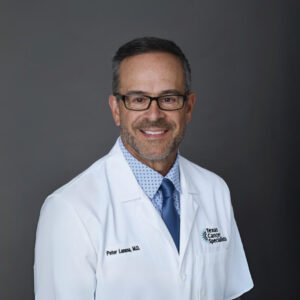
Peter LaNasa, MD
Radiation Oncologist
Known for his patient-first approach and expertise in advanced radiation therapy.
New Welcome to our newly launched website. Same two centers, same physicians, and everything easier to find.

Radiopharmaceutical Therapy
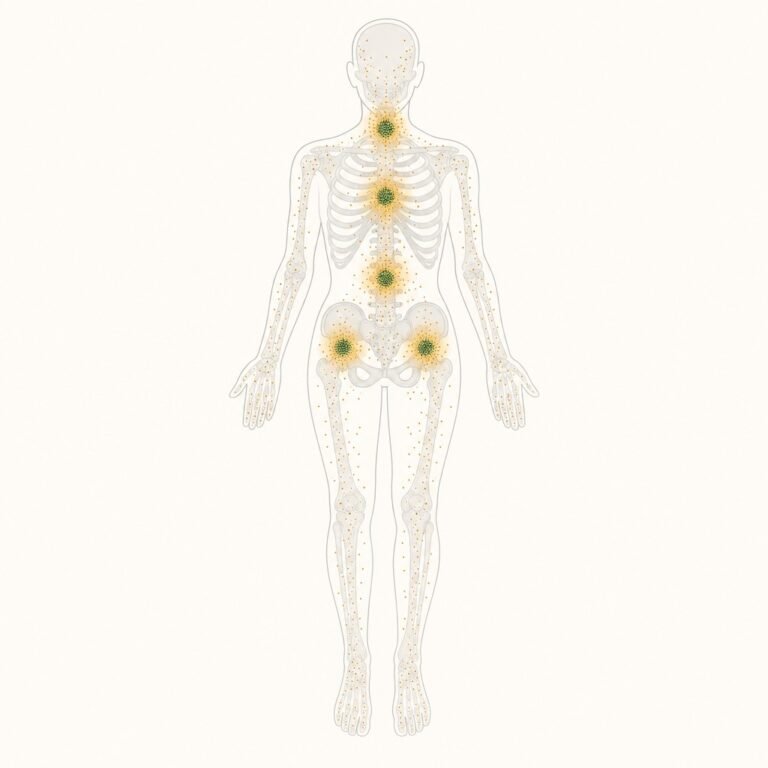
Instead of aiming a beam from outside, the treatment is given as an injection or a capsule. It circulates and collects where the disease is, and treats it from there. This is offered at our Fort Worth center.
Most insurance accepted and Medicare is welcome. See how referrals, insurance and cost work.
Why it is used
The drug is chosen because the body sends it where the cancer is, so it can reach several sites at once rather than one target at a time.
The radiation travels only a very short distance from where the drug settles, so the dose falls away sharply outside that area.
Nothing here is a daily course. Iodine treatment is usually a single administration; radium is given as a small number of appointments spaced weeks apart.
For cancer that has spread to bone, reducing pain and keeping you on your feet is a legitimate goal in itself, and is often the point.
In plain words
A radioactive substance is attached to something your body already handles in a predictable way. Give it, and the body carries it to the tissue that takes that substance up. Radium behaves chemically like calcium, so it collects where bone is actively repairing itself, which is exactly where secondary deposits are. Iodine is taken up mainly by thyroid tissue and by thyroid cancer cells, which is what makes it useful, though the salivary glands take up some as well, and that is why a dry mouth is one of the things to expect.
Once it is there, the radiation it gives off travels a very short distance, so it treats the tissue it has landed in and spares most of what surrounds it. You are not treated on a machine and there is no beam. You have an injection or swallow a capsule, and the treatment happens over the following days.
That is also the reason these treatments carry precautions that external beam radiation does not. External beam stops when the machine switches off; this carries on until the medicine decays and is cleared. How much that restricts you depends on which one you have, and the difference is large, so it is set out for you specifically rather than in general terms.
How it works
Not everyone is suitable, and this is decided properly rather than assumed. Your scans, your blood counts and your general health all bear on it, and so does what other treatment you are having or about to have.
Before anything is given you are told what precautions apply, for how long, and what that means at home. If you live with young children or someone who is pregnant, say so at this appointment rather than afterwards.
An injection or a capsule, given at our Fort Worth center. The administration takes minutes. There is no anesthetic and nothing to lie still inside.
You follow the precautions you were given. After radium-223 those are essentially bathroom hygiene and hand washing for about a week, with no need to keep away from anyone. After iodine-131 they do include keeping a real distance from other people for a number of days. Either way they are time-limited and written down for you.
Some of these treatments are given as a course of several doses spaced weeks apart, with blood tests in between. You are reviewed between doses rather than simply booked in for the next one.

You go home the same day.
For most of these treatments there is no hospital stay. There are some rules to follow for a few days, and they are explained to you in advance rather than handed over on the way out.
Who it is for
This is not a treatment anyone should self-select into. It depends on the type of cancer, on where it has spread, on your blood counts and on what other treatment you are having or about to have. Your radiation oncologist works this out with your medical oncologist or your endocrinologist rather than in isolation.
Our doctors
Radiation Oncologist
Known for his patient-first approach and expertise in advanced radiation therapy.

Radiation Oncologist
Focused on precision treatment planning and compassionate, whole-person care.
Questions
For a period, yes, and this is the honest difference between this treatment and external beam radiation, where nothing stays behind. But how much it affects your family life depends enormously on which treatment you have, and the two are not alike. After radium-223 for bone metastases, the radiation travels less than a tenth of a millimetre, so it does not reach anybody standing next to you: there is normally no need to keep your distance from anyone, including children, and the precautions are about bathroom hygiene and washing your hands for about a week. Iodine-131 is different, because it does give off radiation that leaves your body, and it does mean keeping a real distance from other people for a number of days, particularly young children and anyone pregnant. You will be given the precautions that actually apply to you, in writing, before you agree to anything, and if they are difficult at home we would rather sort that out beforehand than have you find out afterwards.
They depend on which treatment you have. Common ones include tiredness, nausea, and a fall in blood counts, which is why blood tests are done between doses. Treatment to the thyroid can cause a dry or sore mouth and a change in taste. Some effects appear later rather than during treatment, and a small number are lasting. Your oncologist will go through the ones that apply to your treatment and how likely each is before you consent to it.
No. It is radiation, delivered as a medicine rather than as a beam. It is given by a different route from chemotherapy, works in a different way and has a different pattern of side effects, although some, such as tiredness and an effect on blood counts, overlap.
It depends entirely on the situation. After surgery for thyroid cancer, iodine treatment is given with the intention of clearing what remains. For prostate cancer that has spread to bone, the aim is usually to control the disease and reduce pain rather than to cure it, and that is a real and worthwhile aim. Anyone who tells you which of these applies to you without knowing your case is guessing.
For most of these treatments, no, and you go home the same day. Some higher-dose iodine treatments do require a short stay in a room set aside for it. You will know which applies to you well before the day, because it changes what you need to arrange.
Handling and giving a radioactive medicine needs facilities and licensing that sit at our Fort Worth center. If you usually come to Arlington and this treatment is right for you, your care is coordinated between the two rather than started again from the beginning. Call either number and we will sort out where you need to be.
Patient stories
Dr. Lanasa put me at ease immediately and was zeroed on me at each weekly visit during my eight weeks of therapy. His bedside manner is that of a caring and concerned doctor. Staff, like Dr. Lanasa is second to none.
Above Excellent. This man spent literally 2 hours, explaining to me my treatment plan. He is an extremely optimistic inspiring and informative physician. Extremely compassionate. We need more Doctors like him. Thank you so much.
I am so happy I picked Dr. Barker as my husband's doctor. When we learned my husband oral cancer we were shocked and lost about how to start treatment. Dr. Barker was the first doctor we saw and he led us to my husband's surgeon and oncologist. Dr. Barker explained everything to us and answered all our questions. He is the most wonderful doctor. When a family has to go through cancer it make so much easier when you have a doctor like Dr. Barker. He really cares about his patients and their family.
Prostate Treatment by Radiation Therapy completed at the USMD Prostate Cancer Center in Arlington. Dr. Lanasa is exceptional and his staff is very professional. Technicians are friendly and call patients by name and also get you in and out quickly as they know their business.
The best Professional staff and technition help I have ever been involved with in my 66 years. They save my life.
I picked this guy off the internet for no other reason than he had attended college in my home town and of course was a radiation oncologist which is what I needed. The thing I liked best was his honest and direct answers to all my many questions.He was optimistic and the outcome of the radiation was just as he said it would be. What a lucky choice for me.
01 / 06
Online requests are secure and confidential.
This page is for information and is not medical advice. These treatments are only suitable for particular cancers and particular patients, and the precautions that apply depend on which one you are given. Please talk to a qualified physician about your own condition.